Complete Guide: Smart Budgeting Strategies for 2025
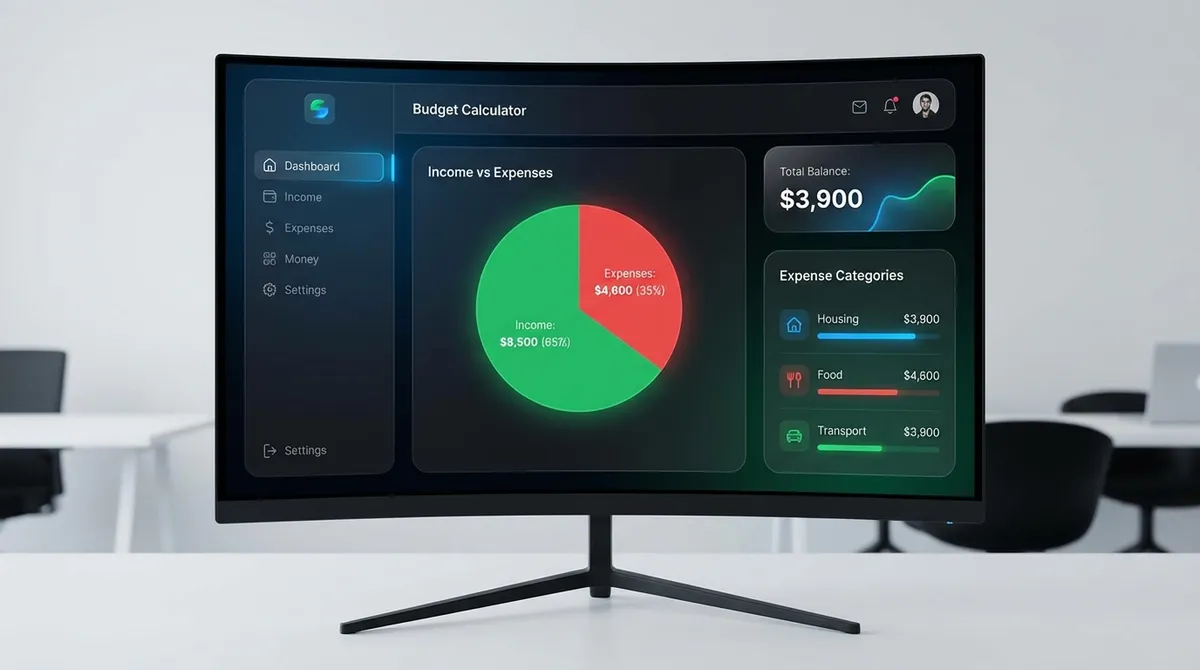
Taking control of your finances starts with a single step: understanding where your money actually goes. In 2025, with fluctuating inflation and changing economic conditions, a static spreadsheet isn't enough. Our Budget Calculator is designed to be your dynamic financial command center—helping you not just track expenses, but optimize them using proven methodologies like the 50/30/20 rule and zero-based budgeting.
Why Budgeting Matters
- •People who budget save 2x more than those who don't.
- •Identifies "subscription creep" immediately.
- •Reduces financial anxiety by 52% (FINRA study).
What You'll Achieve
- •Clear visualization of Needs vs. Wants.
- •A concrete plan to pay off debt faster.
- •Automated savings goals that stick.
How to Choose the Right Budgeting Method
Not all budgets are created equal. Our calculator supports the three most effective strategies for 2025. Here is how to decide which one fits your lifestyle:
1. The 50/30/20 Rule (Best for Beginners)
Popularized by Senator Elizabeth Warren, this method offers a balanced framework without requiring you to track every single penny. It divides your after-tax income into three simple buckets.
Rent, Utilities, Food
Dining, Hobbies
Investments, Debt
2. Zero-Based Budgeting (Best for Debt Payoff)
Give every dollar a job. With this method, your income minus expenses equals exactly zero. If you earn $4,000, you assign exactly $4,000 to categories—including savings. It forces you to be intentional about every cent.
3. Pay Yourself First (Best for Savers)
Reverse budgeting. You set aside your savings goal (e.g., 20% for retirement) immediately upon receiving your paycheck. The rest of your money is yours to spend on needs and wants however you see fit. This requires the least amount of tracking but requires discipline to not dip back into savings.
The Psychology of Saving: Hack Your Brain
Budgeting is often 20% math and 80% behavior. Understanding why you spend can be as important as tracking what you spend.
The "Cash Envelope" Effect
Studies show that paying with physical cash registers as "pain" in the brain, reducing spending by up to 15%. While hard to do in a digital world, using a debit card for discretionary spending instead of a credit card can mimic this effect.
The 24-Hour Rule
For any non-essential purchase over $50, wait 24 hours. 70% of impulse buying urges subside after a good night's sleep.
Automation is Willpower
Don't rely on remembering to save. Set up an automatic transfer on payday for your savings. If you don't see the money, you won't spend it.
Gamification
Turn saving into a challenge. Try a "No Spend Month" where you only buy essentials, or specific challenges like the "52-Week Money Challenge."
Common Budgeting Mistakes to Avoid
Underestimating Variable Expenses
Most people guess their grocery bill is $400 when it's actually $600. Pro tip: Review your last 3 months of bank statements to get a real average before entering data.
Being Too Restrictive
A budget with $0 for fun is a budget you'll quit in two weeks. Our calculator specifically includes a "Wants" section because sustainable budgeting allows for enjoyment.
Forgetting Irregular Costs
Car registration, holiday gifts, and annual subscriptions happen every year. Divide these annual costs by 12 and include them in your monthly "Needs" or "Other Savings".
Emergency Fund 101
Before aggressive investing, you need a safety net. An emergency fund prevents you from going into debt when life happens (car repair, medical bill, job loss).
How Much Do You Need?
- Starter Fund: $1,000. Build this fast (within 1 month) to cover minor mishaps.
- Full Fund: 3-6 months of expenses. If you spend $4,000/month, aim for $12,000-$24,000.
- Entrepreneurs: Aim for 6-9 months due to income volatility.
Where to Keep It?
Do not keep it in your checking account where you might accidentally spend it.
✅ High-Yield Savings Account (HYSA)
Offers 4-5% interest and is FDIC insured. Accessible within 1-3 days.
Method Showdown: Zero-Based vs. 50/30/20
Not all budgets are created equal. Choosing the right framework is often the difference between financial freedom and giving up after a month.
50/30/20 Rule
Allocates 50% to Needs, 30% to Wants, and 20% to Savings. It's flexible and forgiving.
Pros:
- Requires less tracking
- Allows guilt-free spending
- Easy to automate
Zero-Based Budgeting
Every single dollar is assigned a job (Income - Expense = $0). If you make $4,000, you assign exactly $4,000 to categories.
Pros:
- Eliminates wasteful spending
- Faster debt reduction
- Total financial awareness
Budgeting with Credit Card Debt
If you have high-interest credit card debt, your budget needs to shift into "War Time" mode. Following a standard savings rate while paying 24% APR is mathematically disastrous.
Stop the Bleeding
Cut up the cards (or freeze them in a block of ice). You cannot budget your way out of debt if you are still adding to the balance.
The Avalanche Method
Order your debts by Interest Rate (Highest to Lowest). Pay minimums on everything else, and throw every extra dollar at the debt with the highest rate. This minimizes total interest paid.
The Snowball Method
Order your debts by Balance (Smallest to Largest). Pay off the smallest one first to get a "quick win" (see our Debt Snowball Calculator). This is psychologically powerful and keeps you motivated.
Tools of the Trade: Apps vs. Spreadsheets
The best budgeting tool is the one you actually use. Here is a breakdown of the three main approaches in 2025.
Automated Apps (Rocket Money, Monarch)
Pros: Automatically pulls in transactions from your bank. Zero data entry required. Great for "hands-off" tracking.
Cons: Can be expensive ($100+/year). Sometimes miscategorizes expenses. Passive tracking can lead to passive overspending.
Zero-Based Apps (YNAB, EveryDollar)
Pros: Forces you to allocate every dollar before you spend it. Extremely effective for paying off debt.
Cons: Steep learning curve. Requires active daily management.
Spreadsheets (Excel, Google Sheets)
Pros: Free, infinitely customizable, and private. Building it yourself helps you understand the math.
Cons: High friction. If you forget to enter receipts for 3 days, it's hard to catch up.
The Supercharger: High-Yield Savings Accounts (HYSA)
Where you keep your money matters as much as how much you save.
Stop Using Big Bank Savings
Traditional brick-and-mortar banks pay an average interest rate of 0.01%. That means for every $10,000 you save, they pay you $1 a year.
Switch to a HYSA
Online banks (like Ally, Marcus, Sofi, Capital One) offer rates around 4.0% - 5.0% (as of 2025). That same $10,000 earns you $400-$500 a year. It is the easiest "passive income" you will ever make, and it is fully FDIC insured. Cost it out with our HYSA Calculator.
Budgeting by Life Stage
| Life Stage | Recommended Method | Key Focus Area |
|---|---|---|
| Student / First Job | 50/30/20 Rule | Building emergency fund & habits |
| Aggressive Debt Payoff | Zero-Based | Maximizing debt payments |
| Growing Family | Zero-Based | Managing rising fixed costs (childcare) |
| Pre-Retirement | Pay Yourself First | Maxing out 401(k) / Catch-up contributions |
Frequently Asked Questions
How much should I save for an emergency fund?
Most financial experts recommend saving 3 to 6 months of living expenses. This fund should optionally be kept in a High-Yield Savings Account (HYSA) so it grows with inflation while remaining accessible.
Should I pay off debt or save first?
It depends on the interest rate. If you have "toxic" debt (like credit cards over 20% APR), pay that off immediately. Mathematical returns on paying off 20% debt are guaranteed. If the debt is low-interest (like a 3% mortgage), you are often better off investing the difference.
What counts as a "Want" vs a "Need"?
A "Need" is anything essential for survival and working: basic groceries, rent, electricity, and transportation to work. A "Want" is everything else: Netflix, dining out, brand-name clothes, and travel. Be honest with yourself—internet is likely a need, but the fastest fiber package might be a want.
How do I budget with irregular income?
If you are a freelancer or commission-based, base your monthly budget on your lowest expected income month. During high-income months, put 100% of the surplus into a "buffer bucket" or savings. This buffer covers you during the lean months.