What is Equipment Financing and How Does it Work?
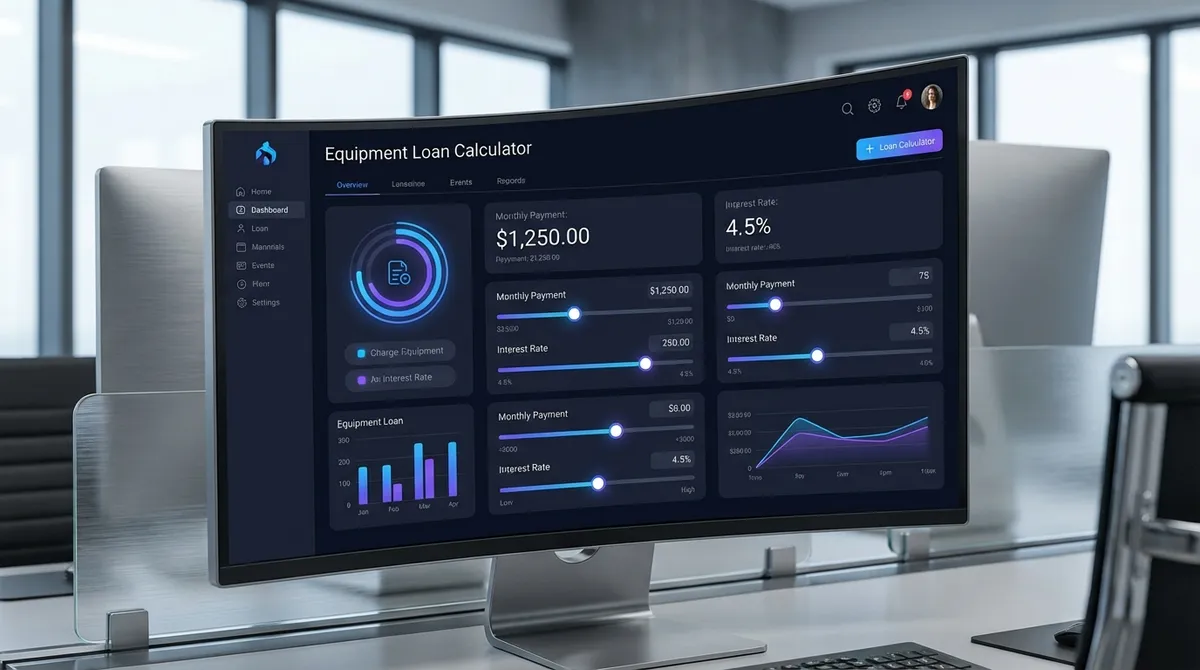
Equipment financing is a specialized form of business lending designed specifically for purchasing machinery, vehicles, technology, and other essential business assets. Unlike traditional business loans that provide general working capital, equipment financing uses the equipment itself as collateral, which typically results in more favorable terms and lower qualification requirements.
How Equipment Financing Works
- 1.Application Process: You apply for financing through a bank, credit union, equipment manufacturer, or specialized equipment lender (including SBA loans). The application typically requires business financial statements, tax returns, bank statements, and details about the equipment you plan to purchase.
- 2.Equipment Evaluation: The lender evaluates both your business creditworthiness and the equipment's value, condition, and expected useful life. Lenders typically finance 80-100% of the equipment's value.
- 3.Approval & Terms: Upon approval, the lender provides loan terms including interest rate, repayment schedule, and loan duration. Terms vary based on equipment type, your credit profile, and business financials.
- 4.Purchase & Repayment: The lender pays the equipment vendor directly or provides funds for you to complete the purchase. You then make regular monthly payments over the loan term.
According to recent industry data, the equipment financing market reached $990.8 billion in 2024, reflecting the critical role this financing method plays in business growth and expansion. Construction, manufacturing, and technology represent the three largest sectors utilizing equipment financing.
Three Main Types of Equipment Financing
Equipment Loans
Traditional loans where you own the equipment outright after purchase. The equipment serves as collateral, typically resulting in lower rates than unsecured business loans.
- • Ownership from day one
- • Depreciation benefits on taxes
- • Loan terms: 2-7 years
- • Interest rates: 3.49% - 18.99%
Equipment Leasing
Lease agreements where you use equipment for a fixed term with lower monthly payments. At lease end, you can purchase, return, or renew the lease.
- • Lower monthly payments
- • Tax-deductible payments
- • Easier equipment upgrades
- • Flexible end-of-term options
Equipment Finance Agreements (EFA)
Hybrid financing combining loan benefits with lease flexibility. You make fixed payments with ownership transfer at term end for a nominal fee.
- • Fixed interest rates
- • Customizable terms
- • Ownership at term end
- • No mileage restrictions
Which Option is Right for Your Business?
- • Equipment has long useful life (7+ years)
- • You want ownership and depreciation benefits
- • Equipment will not become obsolete quickly
- • You plan to use equipment beyond loan term
- • Equipment becomes obsolete quickly
- • You need lower monthly payments
- • Technology changes frequently in your industry
- • You prefer predictable, tax-deductible payments
Equipment Financing Interest Rates and Terms in 2025
Current Market Rates
Equipment financing rates in 2025 typically range from 2% to 20% APR, varying significantly based on your credit profile, equipment type, and lender. Understanding these factors helps you secure the best possible terms. Use our general loan calculator to compare different rate scenarios.
Credit Profile Impact
- Excellent (750+): 3.49% - 6.99% APR
- Good (700-749): 6.99% - 9.99% APR
- Fair (650-699): 9.99% - 13.99% APR
- Poor (600-649): 13.99% - 18.99% APR
Equipment Type Rates
- Heavy Equipment: 3.99% - 8.99% APR
- Machinery: 4.99% - 9.99% APR
- Standard Equipment: 5.99% - 11.99% APR
- Technology: 6.99% - 13.99% APR
Typical Loan Terms
Loan terms vary based on equipment type, cost, and expected useful life. Most equipment financing terms range from 24 to 84 months. Check the amortization schedule with our amortization calculator.
Term Considerations
Lowest total interest, highest payments. Best for equipment with short useful life or when you can afford higher payments.
Balanced approach for most equipment purchases. Monthly payments align with typical cash flow cycles.
Lower monthly payments but higher total interest. Suitable for heavy equipment with long useful life (10+ years).
Rate Forecast for 2025
Industry experts predict equipment financing rates will remain stable through 2025, with slight increases possible in Q3-Q4 if Federal Reserve raises rates. Locking in fixed rates now provides payment certainty.
Equipment Financing Qualification Requirements
Understanding qualification requirements helps you prepare a strong application and increase approval odds. Lenders evaluate multiple factors beyond just your credit score.
Business Requirements
Time in Business
- • Most lenders require 2+ years in business
- • Startups may qualify with strong personal credit
- • Some lenders specialize in new business financing
Annual Revenue
- • Typical minimum: $100,000 annual revenue
- • Strong cash flow improves rates
- • Consistent revenue growth preferred
Business Credit Score
- • Dun & Bradstreet PAYDEX score of 75+ preferred
- • Clean business credit history essential
- • No recent bankruptcies or foreclosures
Personal Requirements
Personal Credit Score
- • 680+ for best rates and terms
- • 650-679 for standard approvals
- • 600-649 may require larger down payment
- • Below 600 often needs cosigner
Financial Documentation
- • Personal tax returns (2-3 years)
- • Personal financial statement
- • Bank statements (3-6 months)
- • Equipment quote or invoice
Debt-to-Income Ratio
- • Most lenders prefer ratio below 45%
- • Includes all personal and business debt
- • Lower ratios qualify for better rates
Tips to Improve Your Qualification
- • Check and improve your credit score
- • Pay down existing debt
- • Organize 3 years of financial statements
- • Prepare detailed business plan
- • Apply with multiple lenders (rate shopping)
- • Consider equipment with strong resale value
- • Offer larger down payment if possible
- • Work with equipment manufacturer financing
Tax Benefits of Equipment Financing
Equipment financing offers significant tax advantages that can reduce your effective cost of borrowing. Understanding these benefits helps you maximize your tax savings while acquiring essential business assets.
Section 179 Deduction
The Section 179 deduction allows businesses to deduct the full purchase price of qualifying equipment purchased or financed during the tax year, up to $1,160,000 in 2025.
- • Immediate deduction up to $1,160,000
- • Applies to equipment put in service in 2025
- • Phase-out begins at $2,890,000 in equipment purchases
- • Includes both new and used equipment
- • Can significantly reduce first-year tax liability
Bonus Depreciation
Bonus depreciation allows for immediate depreciation of 60% of the equipment cost in 2025 (phasing down from 100% in prior years).
- • 60% immediate depreciation in 2025
- • Applies to both new and used equipment
- • Can combine with Section 179 deduction
- • No limit on total equipment cost
Lease Payment Deductions
When you lease equipment, your monthly lease payments are fully tax-deductible as a business operating expense.
- • 100% of lease payments are deductible
- • Simpler than depreciation calculations
- • Predictable monthly tax benefit
- • No recapture when disposing of equipment
- • May qualify for Section 179 treatment
Interaction with Financing
When you finance equipment, you can still claim Section 179 and bonus depreciation deductions even though you are making payments over time. This creates powerful tax benefits in the first year.
Example: $100,000 equipment purchase with $20,000 down payment:
- • Section 179 deduction: $100,000
- • Tax savings (21% rate): $21,000
- • Effective down payment: -$1,000
Equipment Financing by Industry
Different industries have unique equipment financing needs, challenges, and opportunities. Understanding industry-specific factors helps you make better financing decisions.
Construction Industry
- • Excavators, bulldozers, cranes
- • Concrete mixers and pumps
- • Skid steers and loaders
- • Dump trucks and trailers
- • Longer terms available (5-10 years)
- • Lower rates due to equipment value
- • Seasonal payment options available
- • Lenders experienced with industry cycles
Manufacturing
- • CNC machines and lathes
- • Injection molding equipment
- • Assembly line machinery
- • Quality control systems
- • Specialized lenders understand machinery
- • Flexible terms for automation upgrades
- • Technology obsolescence considerations
- • Maintenance agreement requirements
Technology & IT
- • Servers and data center equipment
- • Computer workstations and laptops
- • Networking infrastructure
- • Specialized software licenses
- • Faster obsolescence requires shorter terms
- • Technology refresh programs available
- • Software financing alongside hardware
- • Leasing often more attractive than purchasing
Common Equipment Financing Mistakes to Avoid
Avoid these common pitfalls that cost businesses thousands of dollars in unnecessary expenses and missed opportunities.
Financial Mistakes
- 1.Not Shopping Around: Failing to compare multiple lenders can cost you 2-5% in interest rates. Always get at least 3-5 quotes from different lenders.
- 2.Ignoring Total Cost: Focusing only on monthly payments instead of total interest paid over the loan term. A lower payment often means higher total cost.
- 3.Overlooking Fees: Application fees, origination fees, prepayment penalties, and documentation fees can add thousands to your loan cost.
- 4.Too Long Terms: Extending terms to reduce payments increases total interest and may result in owing more than equipment value.
Strategic Mistakes
- 5.Wrong Equipment Type: Financing equipment that does not match your actual needs or will not generate sufficient ROI to cover payments.
- 6.Ignoring Resale Value: Not considering equipment depreciation and resale value, especially for technology that becomes obsolete quickly.
- 7.Poor Timing: Waiting until equipment desperately needs replacement rather than planning upgrades during optimal financing conditions.
- 8.Missing Tax Benefits: Not taking advantage of Section 179 deduction, bonus depreciation, or properly structuring lease vs. purchase decisions.
How to Protect Yourself
- • Read all terms and conditions carefully
- • Calculate total cost including all fees
- • Understand prepayment penalties
- • Clarify end-of-term obligations
- • Keep copies of all agreements
- • Document equipment condition
- • Save correspondence with lenders
- • Maintain payment records
- • Build emergency fund for payments
- • Understand force majeure provisions
- • Know insurance requirements
- • Plan for equipment downtime