LTV Calculator — Loan-to-Value Ratio Calculator for Mortgages (2025)

Free LTV calculator shows your loan-to-value ratio and explains how it affects mortgage rates, PMI requirements, and loan approval. Calculate LTV instantly.

Free Finance Calculator
100% Private
Instant Results

LTV Calculator — Loan-to-Value Ratio Calculator for Mortgages (2025)

Enter your details below to calculate

Down Payment:$60,000
Down Payment Percentage:20.0%

Quick Scenarios:

How to Use Ltv Calculator

1

Enter Property Value

Input the current market value or purchase price of the property. Use a realistic estimate based on comparable sales or a professional appraisal.

2

Input Mortgage Amount

Enter the total loan amount you're seeking. If you know your down payment, subtract it from the property value to get your mortgage amount.

3

Review Your LTV Instantly

See your LTV ratio calculated in real-time along with risk assessment, PMI requirements, and recommendations for improving your ratio.

4

Try Different Scenarios

Adjust your down payment amount to see how it affects your LTV. Use our preset scenarios to compare conventional, FHA, and investment property options.

Key Features

Fast ltv calculator calculations

Clear inputs and results

Mobile-friendly, privacy-first

Free to use, no signup

Complete Guide: LTV Calculator — Loan-to-Value Ratio Calculator for Mortgages (2025)
Written by Marko HrvojevićSeptember 12, 2025
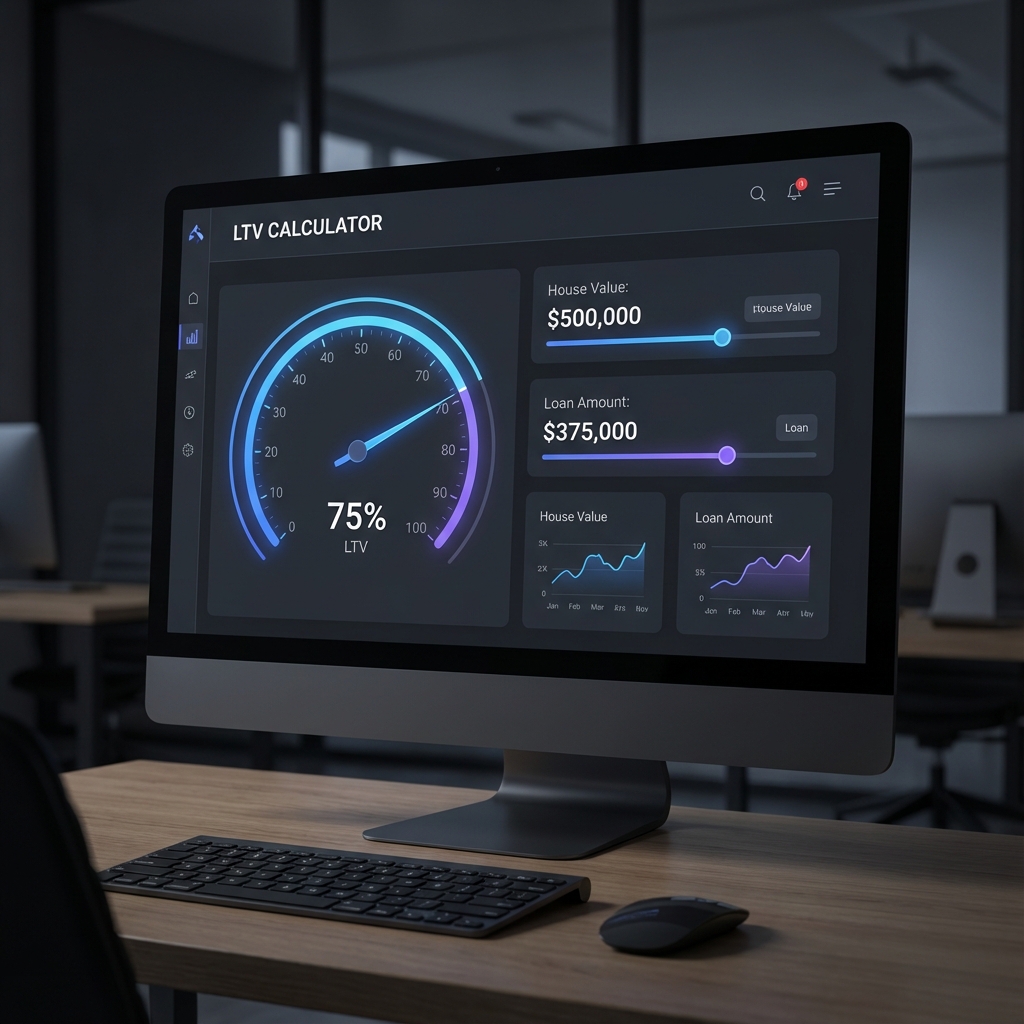
This visual explains our ltv calculator: principal, interest, taxes, insurance, and amortization. See how inputs affect payments using loan to value calculator.

Free LTV calculator shows your loan-to-value ratio and explains how it affects mortgage rates, PMI requirements, and loan approval. Calculate LTV instantly.

Understanding your loan-to-value (LTV) ratio is essential for navigating the mortgage process and securing the best financing terms. The LTV ratio not only affects your interest rate but also determines whether you'll need private mortgage insurance (PMI) and what loan programs you qualify for. By using our LTV calculator, you can instantly see how different down payment amounts impact your financing position and make informed decisions about your home purchase.

What is LTV (Loan-to-Value)?

LTV stands for Loan-to-Value and represents the ratio between your mortgage amount and your property's value, expressed as a percentage. Lenders use this critical metric to assess risk when evaluating mortgage applications. A lower LTV ratio indicates less risk for the lender, which typically translates to better interest rates and more favorable loan terms for borrowers.

LTV is calculated using a simple formula: divide your loan amount by the property's appraised value, then multiply by 100. For example, if you're buying a $300,000 home with a $240,000 mortgage, your LTV is 80% ($240,000 ÷ $300,000 = 0.80 or 80%). This 80% threshold is particularly significant because it represents the cutoff where private mortgage insurance (PMI) is typically no longer required.

Why Your LTV Ratio Matters for Mortgage Approval

Your loan-to-value ratio is one of the most important factors lenders consider when reviewing your mortgage application. Lenders view lower LTV ratios as less risky because borrowers have more equity in the property from day one. This equity cushion protects the lender if property values decline or if the borrower defaults on the loan.

LTV ratios directly impact several aspects of your mortgage: the interest rate you'll pay, whether PMI is required, what loan programs you qualify for, and even your chances of approval. Most conventional lenders prefer LTV ratios of 80% or lower, though many will approve loans with higher LTV ratios, especially for well-qualified borrowers or through government-backed programs like FHA, VA, or USDA loans.

How to Calculate Your LTV Ratio

The LTV ratio calculation is straightforward, but accuracy is crucial for meaningful results. You need two key pieces of information: the property's current market value (or purchase price) and the loan amount you're seeking.

LTV Formula:

LTV Ratio = (Mortgage Amount ÷ Property Value) × 100

For example, if you're purchasing a $400,000 home and putting down $80,000, your mortgage amount would be $320,000. Your LTV would be 80% ($320,000 ÷ $400,000 = 0.80 × 100 = 80%).

Our LTV calculator automatically performs this calculation for you and provides additional context about what your specific LTV ratio means in practical terms. It also shows you how different down payment amounts would affect your LTV and what loan programs might be available at various LTV levels.

LTV Thresholds and What They Mean

Different LTV ranges correspond to different levels of risk and have distinct implications for borrowers. Understanding these thresholds helps you plan your home purchase strategy and anticipate what to expect from lenders.

LTV ≤ 80% (Low Risk)

This is the gold standard for conventional mortgages. At 80% LTV or lower, you'll typically qualify for the best available interest rates and avoid PMI entirely. This represents a 20% down payment or more and demonstrates strong financial commitment to the property. Lenders view these loans as lowest risk, which translates to significant savings over the life of your loan.

LTV 80-85% (Moderate Risk)

While still considered relatively safe by lenders, this range requires PMI. Interest rates may be slightly higher than at 80% LTV, but competitive options remain available. Some borrowers in this range choose to accept PMI temporarily with plans to refinance once they've built enough equity to reach 80% LTV.

LTV 85-90% (High Risk)

At this level, PMI costs become more significant and interest rates increase noticeably. Many conventional lenders have stricter requirements for borrowers in this range, including higher credit score minimums and lower debt-to-income ratios. Government-backed loans like FHA become more attractive in this LTV range.

LTV > 90% (Very High Risk)

LTV ratios above 90% are considered very high risk for conventional lenders. Most will decline applications at this level unless borrowers have exceptional qualifications. Specialized programs like Fannie Mae's HomeReady or Freddie Mac's Home Possible (allowing up to 97% LTV) may be options, as are FHA loans requiring as little as 3.5% down. VA and USDA loans can even allow 100% financing for eligible borrowers.

LTV and Private Mortgage Insurance (PMI)

Private Mortgage Insurance (PMI) is typically required for conventional loans with LTV ratios above 80%. PMI protects the lender if you default on your loan, and it's usually paid as a monthly premium added to your mortgage payment. The cost typically ranges from 0.5% to 1% of the entire loan amount annually.

For a $300,000 loan with 1% PMI, you'd pay approximately $3,000 per year or $250 per month. PMI automatically terminates when your LTV reaches 78% through regular amortization, or you can request removal at 80% LTV if you have a good payment history and the property hasn't declined in value. Understanding how LTV affects PMI costs helps you evaluate whether making a larger down payment to avoid PMI makes financial sense.

How Different Loan Types Handle LTV

Different mortgage programs have varying LTV requirements and flexibility. Understanding these differences helps you choose the right loan program based on your down payment capabilities and financial situation.

Conventional Loans

Conventional loans typically require LTV ratios of 80% or lower for the best terms, though they'll often approve loans up to 95-97% LTV for well-qualified borrowers. Conventional loans with LTV above 80% require PMI, which can be removed once you reach 80% LTV. These loans follow guidelines set by Fannie Mae and Freddie Mac.

FHA Loans

Federal Housing Administration (FHA) loans allow LTV ratios up to 96.5% (requiring only 3.5% down) for borrowers with credit scores of 580 or higher. FHA loans require mortgage insurance premiums (MIP) for the life of the loan if your down payment is less than 10%. This is a key difference from conventional PMI, which can be removed.

VA Loans

Veterans Affairs (VA) loans offer 100% financing (100% LTV) for eligible veterans, active-duty service members, and surviving spouses. These loans don't require PMI or MIP, making them one of the most affordable options for those who qualify. Instead, they charge a VA funding fee that can be financed into the loan.

USDA Loans

U.S. Department of Agriculture (USDA) loans also offer 100% financing for eligible rural and suburban homebuyers who meet income requirements. Like VA loans, they don't require PMI but do include guarantee fees. These programs make homeownership accessible for buyers who might not have substantial down payments saved.

Strategies to Improve Your LTV Ratio

If your LTV ratio is higher than you'd like, several strategies can help improve it. A better LTV ratio can save you thousands of dollars over the life of your loan through lower interest rates and reduced or eliminated PMI costs.

Increase Your Down Payment

The most direct way to lower your LTV is by increasing your down payment. Even small increases can make a significant difference. For example, on a $300,000 home, increasing your down payment from 10% ($30,000) to 15% ($45,000) drops your LTV from 90% to 85%, potentially qualifying you for better rates and lower PMI costs.

Consider a Less Expensive Property

If you're struggling to reach a desirable LTV ratio on your target property, consider shopping for a less expensive home. Your down payment represents a larger percentage of a lower-priced property, automatically improving your LTV ratio and potentially expanding your loan options.

Wait for Property Appreciation

If you already own a home and want to refinance, property appreciation can naturally lower your LTV ratio. As your home's value increases while your mortgage balance decreases through payments, your equity grows and your LTV improves. Some homeowners wait for significant appreciation before refinancing to eliminate PMI.

Make Extra Principal Payments

If you already have a mortgage with PMI, making extra principal payments can help you reach 80% LTV faster, allowing you to request PMI removal sooner. Even small additional payments each month can shave years off your timeline to 80% LTV and save thousands in PMI costs.

LTV for Refinancing and Home Equity

LTV ratios aren't just important for initial home purchases—they also play a crucial role in refinancing decisions and accessing home equity. When refinancing, lenders will calculate a new LTV ratio based on your current mortgage balance and the property's current appraised value.

For cash-out refinancing or home equity loans, LTV requirements are typically stricter than for purchase loans. Most lenders cap cash-out refinance LTV at 80% for conventional loans, meaning you must maintain at least 20% equity in your home. Home equity lines of credit (HELOCs) often have combined loan-to-value (CLTV) limits of 80-85% when combined with your primary mortgage.

Common LTV Calculation Mistakes to Avoid

Accurate LTV calculation is crucial for proper financial planning. Here are common mistakes to avoid when calculating your loan-to-value ratio:

Using Purchase Price Instead of Appraised Value

Lenders use the appraised value, not necessarily the purchase price, for LTV calculations. If you're getting a great deal and buying below market value, the appraisal might come in higher than your purchase price, potentially giving you a better LTV than expected.

Forgetting About Closing Costs

Closing costs are separate from your down payment and don't reduce your loan amount. Some buyers mistakenly think $20,000 in closing costs plus $40,000 down on a $200,000 home gives them 30% down (70% LTV), when actually it's only 20% down (80% LTV) with $20,000 in additional costs.

Confusing LTV with Down Payment Percentage

Some borrowers mistakenly think 20% down means 20% LTV. Actually, 20% down means 80% LTV. Your down payment percentage and LTV always add up to 100%.

Ignoring Second Mortgages

For combined loan-to-value (CLTV) calculations, you must include all loans against the property. A HELOC or second mortgage can significantly increase your CLTV, affecting your ability to refinance or access additional equity.

Using LTV Data to Negotiate Better Mortgage Terms

Understanding your LTV ratio gives you leverage when shopping for mortgages. If your LTV is 80% or lower, you can confidently request the best available rates and refuse PMI. If it's slightly above 80%, you might negotiate with lenders about PMI options or consider a piggyback loan (80-10-10) to avoid PMI while putting less than 20% down.

When refinancing, a lower LTV gives you significant negotiating power. Multiple lenders will compete for your business, and you can use your strong equity position to demand better terms, lower fees, or rate reductions. Our LTV calculator helps you understand exactly where you stand before entering these negotiations.

By mastering LTV calculations and understanding how lenders view different ratios, you're better equipped to make strategic decisions about down payments, property selection, and timing of your home purchase or refinance. This knowledge can save you thousands of dollars and help you secure the most favorable financing terms available.

About the Author

Marko Hrvojević

Finance Expert, CPA with 12+ years in financial analysis and tax planning

Connect with Marko

Frequently Asked Questions

What is a good LTV ratio for a mortgage?

A good LTV ratio is 80% or lower. At 80% LTV, you'll typically qualify for the best interest rates and avoid private mortgage insurance (PMI). LTV ratios between 80-85% are still considered acceptable but will require PMI. Ratios above 90% are considered high-risk and may limit your loan options.

How does LTV affect my mortgage interest rate?

Lower LTV ratios generally qualify for lower interest rates because they represent less risk to lenders. Borrowers with 80% LTV or lower typically receive the best rates. As LTV increases above 80%, interest rates typically increase incrementally. At 95% LTV or higher, rates can be significantly higher, and fewer lenders will approve your loan.

Can I get a mortgage with 95% or 100% LTV?

Yes, but options are limited. Conventional loans typically max out at 97% LTV. FHA loans allow up to 96.5% LTV (3.5% down). VA and USDA loans offer 100% financing (0% down) for eligible borrowers. However, higher LTV loans require mortgage insurance and may have higher interest rates.

How can I lower my LTV ratio?

You can lower your LTV by: making a larger down payment, choosing a less expensive property, or paying down your mortgage principal (for existing homeowners). Even a small increase in down payment can significantly improve your LTV. For example, on a $300,000 home, increasing your down payment from 10% to 15% drops your LTV from 90% to 85%.

What's the difference between LTV and CLTV?

LTV (Loan-to-Value) only considers your primary mortgage amount divided by property value. CLTV (Combined Loan-to-Value) includes all loans against the property - your primary mortgage plus any second mortgages, HELOCs, or home equity loans. Lenders use CLTV to assess total risk when you have multiple loans on one property.

When can I remove PMI from my mortgage?

PMI can typically be removed when your LTV reaches 80% through regular payments, property appreciation, or additional principal payments. By law, lenders must automatically terminate PMI when your LTV reaches 78% based on your original amortization schedule. You can also request early removal at 80% LTV if you have a good payment history and the property value is verified.

How does property value affect my LTV when refinancing?

When refinancing, lenders use a current appraisal to determine your property's value. If property values have increased since your purchase, your LTV will be lower than when you bought, potentially helping you qualify for better rates or eliminate PMI. Conversely, if values have declined, your LTV might be higher, which could limit your refinancing options.

Share this calculator

Help others discover this tool

Related Calculators

Explore more tools in Loans & Mortgages

Auto Loan Calculator: Monthly Payment & Total Cost (2025)

Free auto loan calculator estimates monthly payments, total interest, and amortization. Compare new vs used cars, down payment impacts, and current 2025 rates.

Loans & Mortgages

Auto Loan Payoff Calculator: Calculate Early Payoff Savings & Interest Reduction

Free auto loan payoff calculator shows how much you'll save by paying off your car loan early. See interest savings, months reduced, and new payoff date. Includes prepayment penalty considerations.

Loans & Mortgages

Auto Loan Refinance Calculator: Free Car Loan Refinancing Tool & Savings Estimator

Use our auto loan refinance calculator to see how much you can save by refinancing your car loan. Compare current vs new rates, calculate monthly savings, and determine if refinancing makes financial sense.

Loans & Mortgages

Boat Loan Calculator: Free Marine Financing & Payment Calculator

Free boat loan calculator with 2025 rates. Calculate monthly payments, total interest, and understand marine financing requirements including surveys and documentation.

Loans & Mortgages

Bridge Loan Calculator: Estimate Monthly Costs and Rates

Use our bridge loan calculator to estimate interest‑only payments and total cost for short‑term financing. Model rate, fees, and term. Get instant results.

Loans & Mortgages

Cash-Out Refinance Calculator: Estimate Your Home Equity & New Payment (2025)

Free cash-out refinance calculator estimates how much equity you can access, new monthly payment, and total costs. Includes LTV limits, closing costs, and 2025 guidelines.

Loans & Mortgages